Your cart
There are no more items in your cart



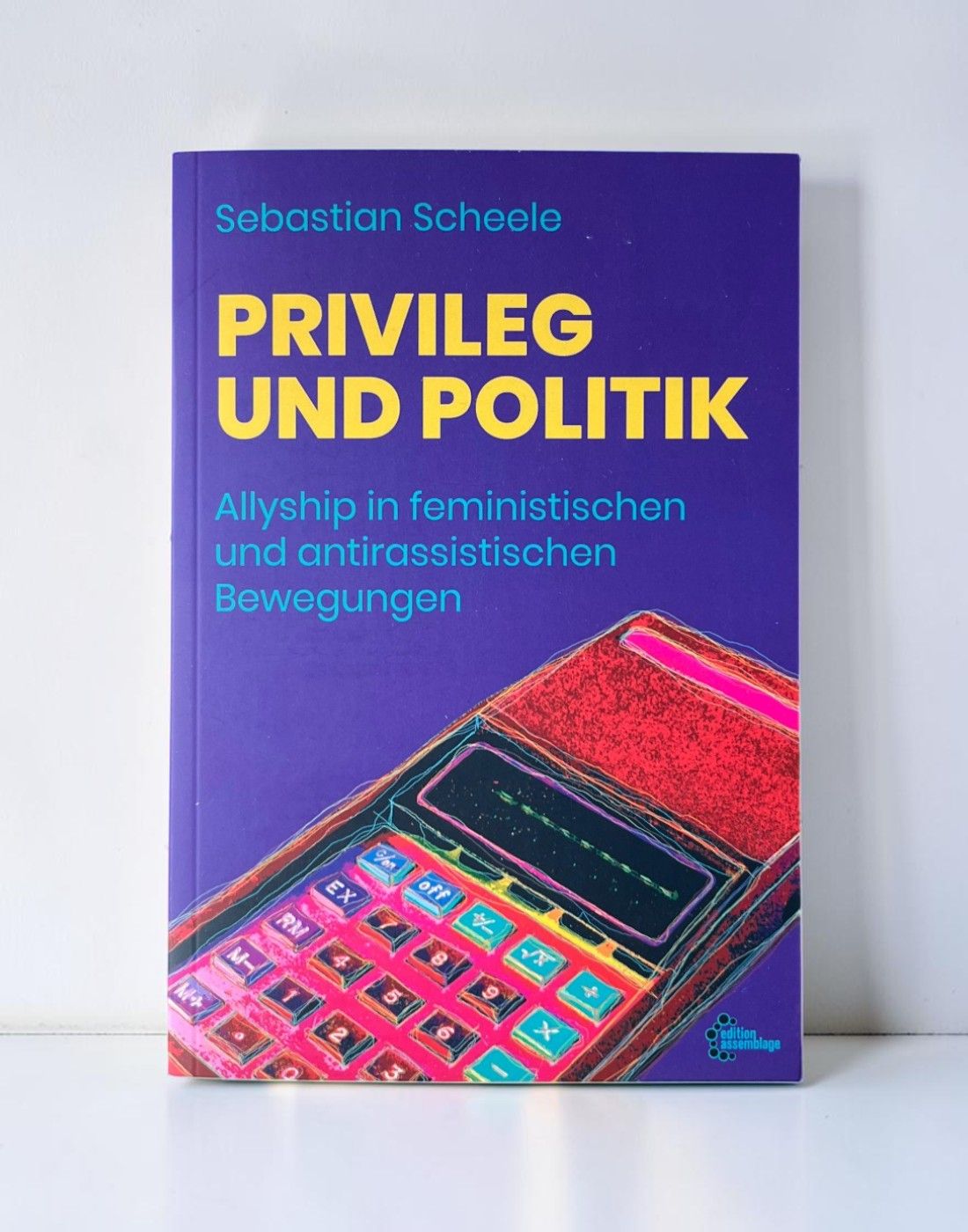
Privileg und Politik
Allyship in feministischen und antirassistischen Bewegungen
Sebastian Scheele
Here you can find the complete selection of books, magazines and calendars in our shop.
Within social movements, a discourse on power relations has become widespread, centred on the terms ‘privilege’ and ‘privileged’, and linked to the call to action to become an ‘ally’. Debates surrounding this discourse on privilege are polarised. This book takes a step back and traces how anti-racist and feminist movement knowledge has been taken up in educational settings (classrooms, training sessions and workshops), where it has crystallised into a pedagogically shaped discourse on privilege. The practical guidelines, which frame the development into an ‘ally’ as a form of personal growth, are characterised by liberal conceptions of the subject that narrow the focus in an individualising manner. In doing so, there is a risk that movement-specific tasks will be lost sight of. Social movements must find a conscious way of addressing this; to this end, the book draws on the wealth of knowledge from social movements to establish connections.
You might also like