Your cart
There are no more items in your cart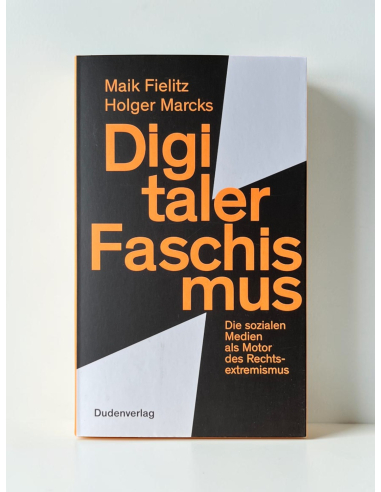
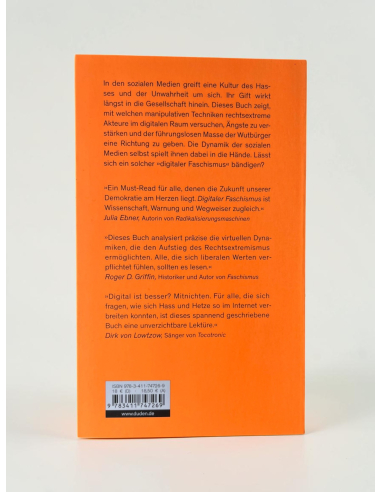
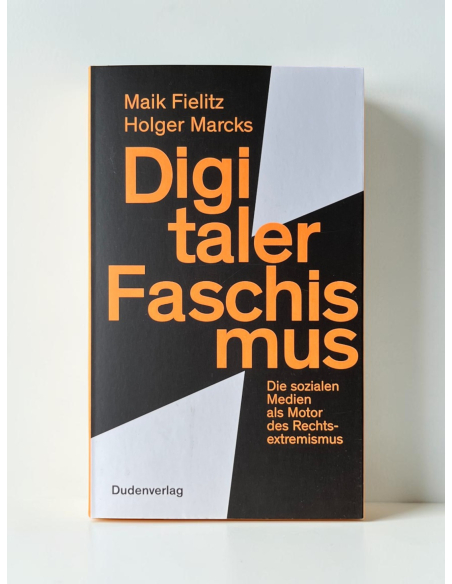
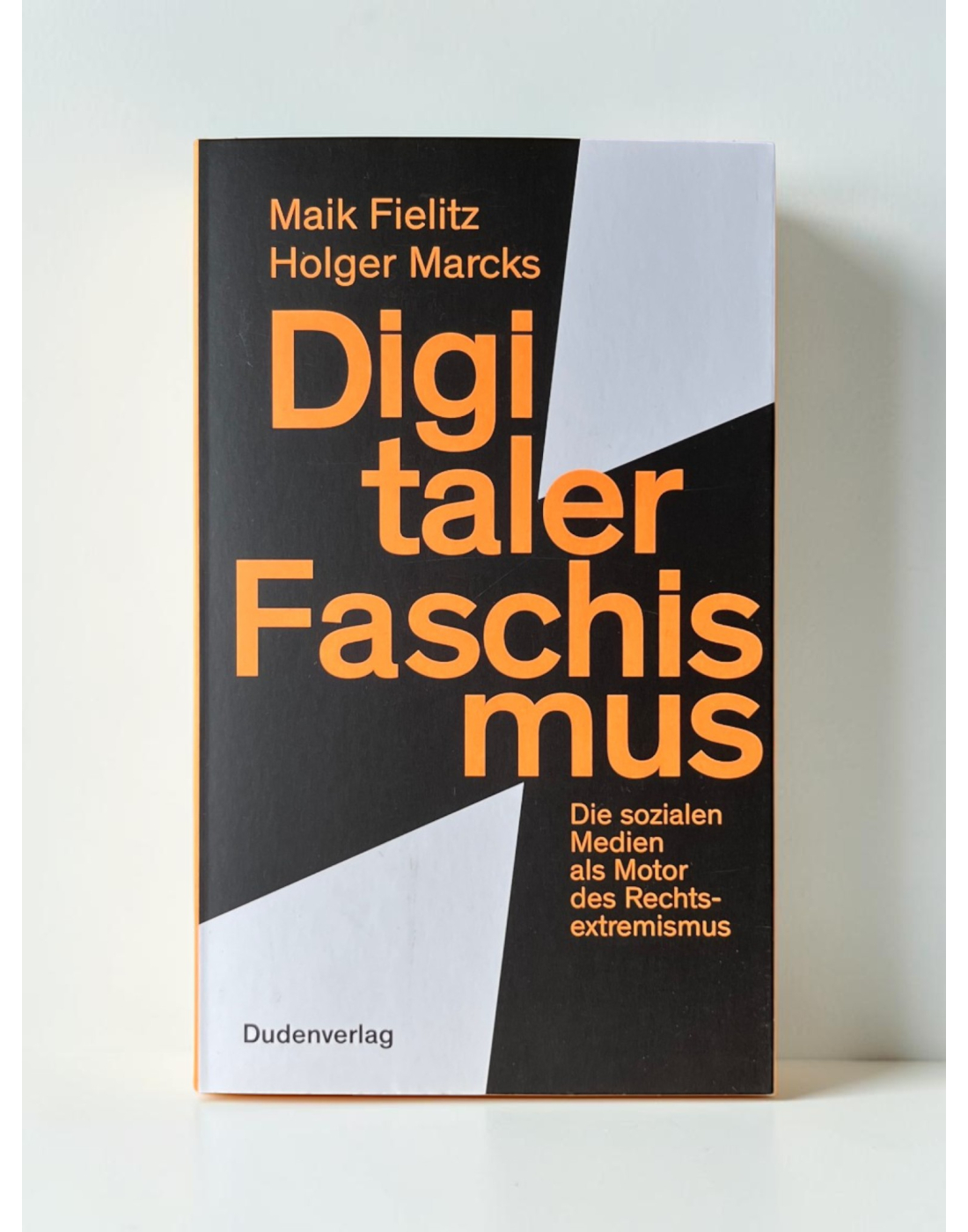
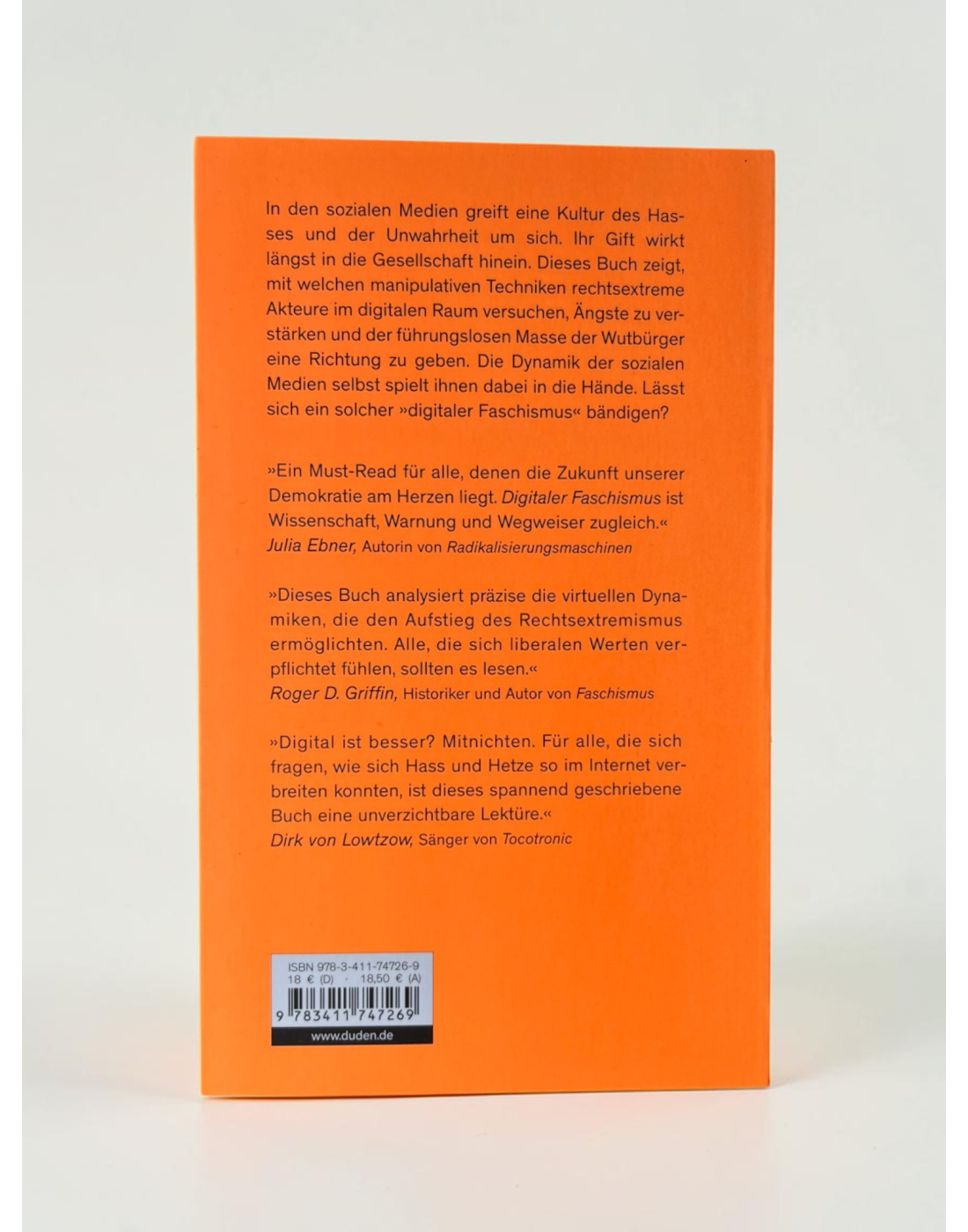
Digitaler Faschismus
Die sozialen Medien als Motor des Rechtsextremismus
Maik Fielitz, Holger Marcks
Here you can find the complete selection of books, magazines and calendars in our shop.
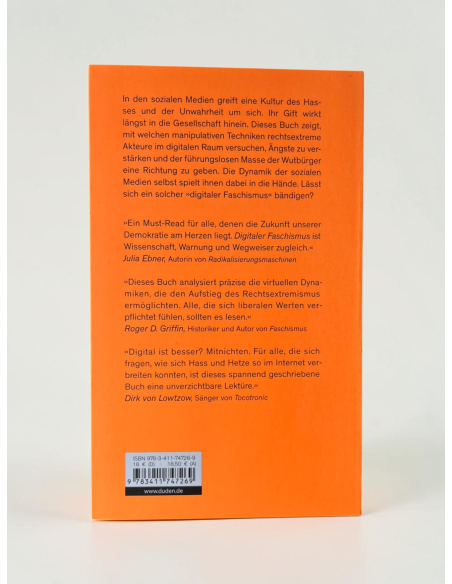
The internet and social media were once seen as an opportunity for unlimited access to knowledge – and thus as the foundation for a new golden age of democratic debate. Yet today, instead, we are confronted with online hate, fake news and conspiracy theories. Right-wing parties and organisations such as the AfD, Pegida and the Identitarian Movement are able to spread their ideologies almost unhindered.
Yet this is not merely a case of ‘online radicalisation’. This is demonstrated by the wave of right-wing violence, such as the attacks in Halle and Hanau, and a growing acceptance of right-wing views amongst the general public.
Maik Fielitz and Holger Marcks analyse this development and get to the root of its causes:
The role of social media in the rise of ultra-nationalism and right-wing motivated crimes
The manipulation techniques of the far right: sowing confusion, stoking fears and distorting the balance of opinion
Far-right communication on the internet: conspiracy theories, myths of threat, lies and messages of hate
Social media as a digital accelerant: facts, background and Analysis.
The authoritarian revolt poses a major challenge to democracies and open societies. How can we counter far-right tendencies? Politicians, as well as internet companies, are called upon to take action. How can ‘digital fascism’ be curbed without restricting our right to freedom of expression?
Maik Fielitz and Holger Marcks engage in an in-depth discussion of these questions. They examine the manipulative strategies and psychological tricks employed by far-right actors and outline possible ways out of this predicament. Their non-fiction book is an important contribution to the political debate!
You might also like