Your cart
There are no more items in your cart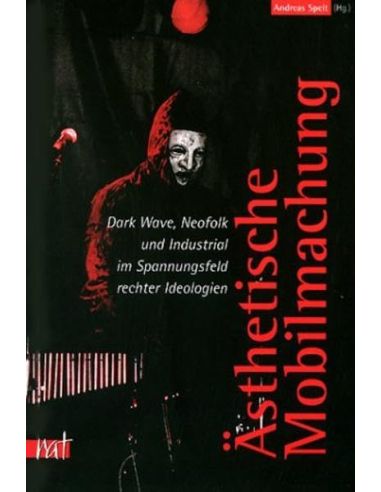
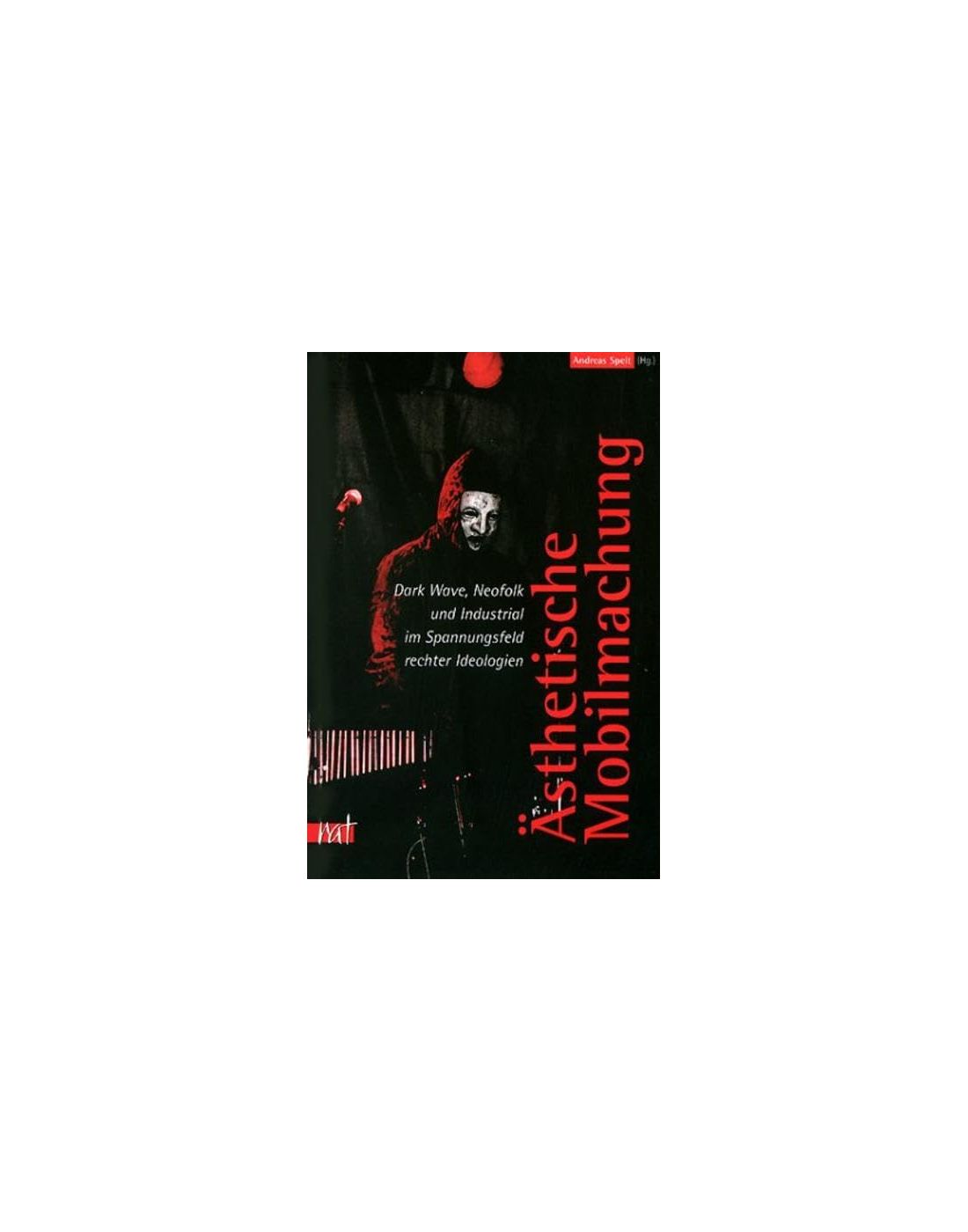
Jenseits der Neonazi-Skinhead-Musik festigt sich innerhalb von Dark Wave und Industrial eine rechte Musikszene
Ästhetische Mobilmachung
Dark-Wave, Neofolk und Industrial im Spannungsfeld rechter Ideologien
Andreas Speit
Here you can find the complete selection of books, magazines and calendars in our shop.
Beyond neo-Nazi skinhead music, a right-wing music scene is establishing itself within dark wave and industrial music, oscillating between myth and aesthetics: but the myths are not without tradition, and the aesthetics are not without ideology. Rhythm, lyrics and performance convey anti-democratic and anti-emancipatory motifs that are not only tolerated but also accepted by a booming, uncritical scene.
The authors highlight the use of right-wing ideologies in the independent culture of dark wave, neofolk and industrial and describe the connections to the extreme right. After a general description of the scene, right-wing labels, bands and publications are analysed without scandalising or relativising their significance for the scene as a whole.
The authors examine the magazine Sigill and its national environment as an example, describing the band Death In June and its international connections to the moderate to extreme right-wing scene.
The book is rounded off with a consideration and discussion of the phenomenon of Neue Deutsche Härte (New German Hardness).
Review:
eclipsed, 06/04
‘“Ästhetische Mobilmachung” is an exhaustive and brilliant publication that is unrivalled on the German book market! Why the book is ignored by some music magazines is something everyone can think about for themselves.’
Intro 06/2002 – Johannes Loh
We all remember the heated debates surrounding Rammstein, Witt and their ilk. They centred on problematic images, controversial staging, the rolling ‘R’ and questionable use of controversial symbols. ‘Freedom of art!’ cried some, while others retorted, ‘You eternal killjoys!’ And besides, Rammstein and Witt aren't right-wing at all! They said so themselves.
Because that's true, and because Rammstein's Riefenstahl-esque coquetry and Witt's flood imagery are, despite everything, just the tip of the iceberg, the book Ästhetische Mobilmachung (Aesthetic Mobilisation, €16), recently published by Unrast Verlag, is incredibly important. On the one hand, it explains how reactionary, fascist aesthetics can become part of mainstream pop culture and then slip through the airwaves as seemingly apolitical imagery. On the other hand, it reveals discursive connections, the invisible handwriting of right-wing ideologues and thought leaders who invented and popularised such images.
What the seven authors of this book describe vividly and in a way that is easy to understand even for those unfamiliar with the scene in just under 300 pages can be applied, with a few exceptions, to any other pop culture movement. No matter if rock, ska or hip hop: ‘Today's taboo-breaker is tomorrow's mainstream’ is the title Stephan Lindke gives to his article on ‘Neue Deutsche Härte (New German Hardness) as an aesthetic reflection of a resurgent nation’, thus finding a universally valid, almost aphoristic punchline. Hans Waders presents a concise and knowledgeable account of the development of the ‘black scene’ and identifies breaks, divisions and differentiations – i.e. those points where not only has something changed musically, but new narratives and fragments of ideology have also been added. Jan Raabe and Andreas Speit examine the historical dimension of ‘mobilisation’ and draw a line ‘from anti-bourgeois gestures to fascist aesthetics’. Christian Dornbusch, co-editor of the forthcoming book Rechtsrock (also published by Unrast-Verlag), examines the role of the notorious Nazi band Death in June, while Thomas Naumann and Patrick Schwarz take a close look at the development of the scene magazine Sigill.
The authors never lose themselves in feuilletonistic babble, but reflect their arguments knowledgeably in line with social realities. The relevance of the national discourse since 1989 is explained, as is the ideological appeal of the New Centre, which downplays reactionary gestures as aesthetic provocation.
‘Aesthetic Mobilisation’ is more than just a collection of essays. The contributions are well coordinated, thoroughly researched and offer apt analyses. Anyone willing to reflect on the interaction between pop and politics will find plenty of material and inspiration here. In addition, the book makes an important contribution to the topic of ‘re-politicising pop music,’ which has also been discussed here in INTRO for several issues now. The authors demonstrate that the New Right has long been deeply involved in the pop business and that, from RockNord to Junge Freiheit, an aesthetic mobilisation of right-wing, anti-modernist and anti-Enlightenment images is being promoted. No one wanted such a ‘re-politicisation of the right’. This makes it all the more important not to underestimate it now.
You might also like